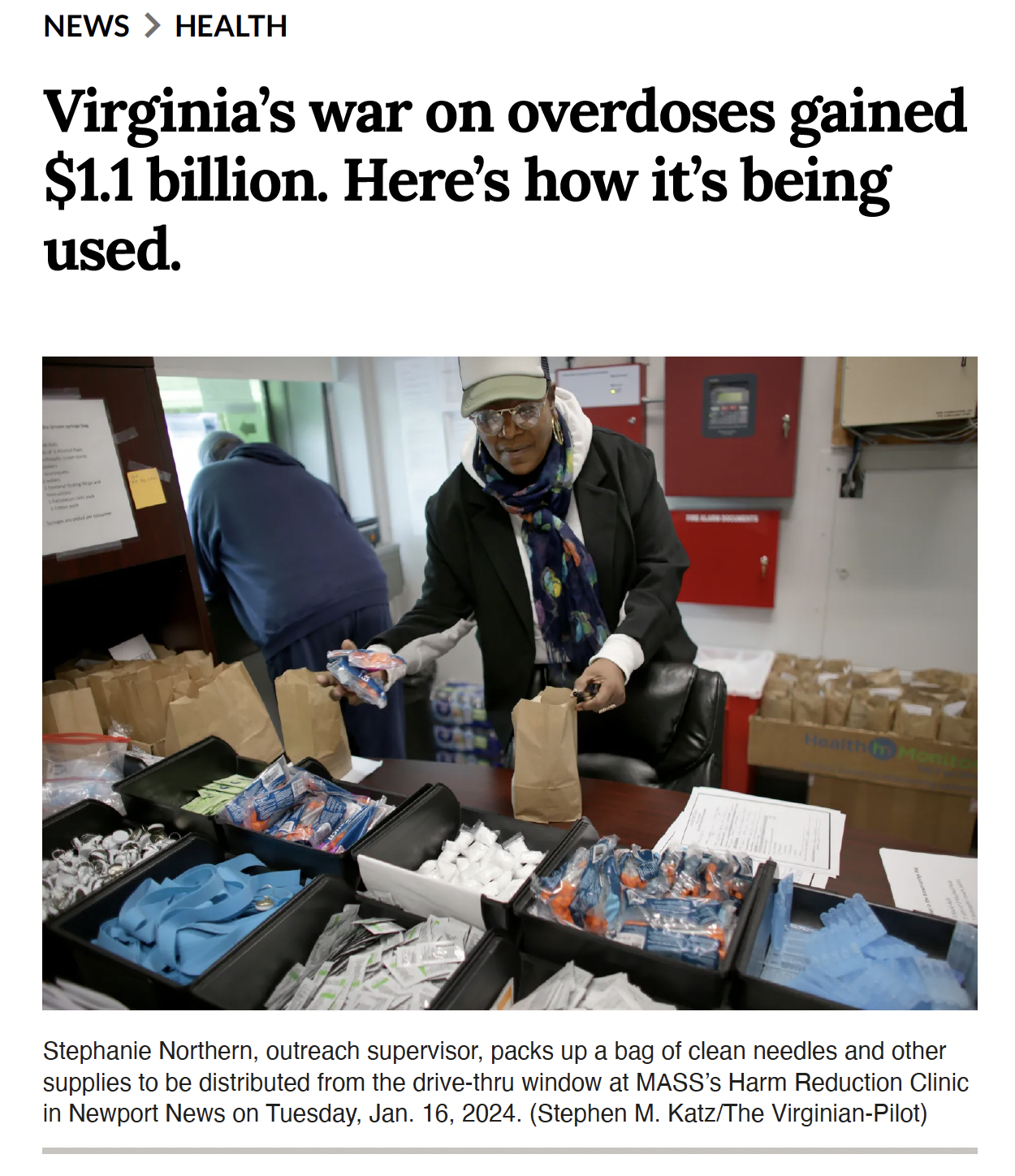
In what used to be a bank in Newport News, a sign in the drive-through window now reads
“Dead friends
Can’t recover.
Overdose deaths
Are preventable.”
Below the window, an orange plastic bin contains a haystack of used needles and syringes.
The building on Huntington Avenue is now a harm reduction clinic, operated by the nonprofit Minority AIDS Support Services. Visitors to the drive-through, or to the clinic inside, can receive supplies that limit the risks associated with drug use, such as fatal and nonfatal overdoses, drugs contaminated with substances such as fentanyl or or Xylazine, or infections or injuries from old needles or contaminated supplies.
Workers also hand out hygiene kits, snacks, resources for recovery for those who want want it — and a healthy dose of care and compassion.
It’s a needed service, said Gwendolyn Ellis-Wilson, executive director of MASS. People come to the clinic from all seven cities, and as far south as Elizabeth City in North Carolina, she said. It’s also the type of service that’s long past due in Hampton Roads, according to some.
Overdose deaths have been on the rise in Virginia, with the rate nearly doubling between between 2018 and ’21.
But with new sources of funding available through national settlements with pharmaceutical companies, cities and community-based organizations are revamping their approaches to combating the crisis.